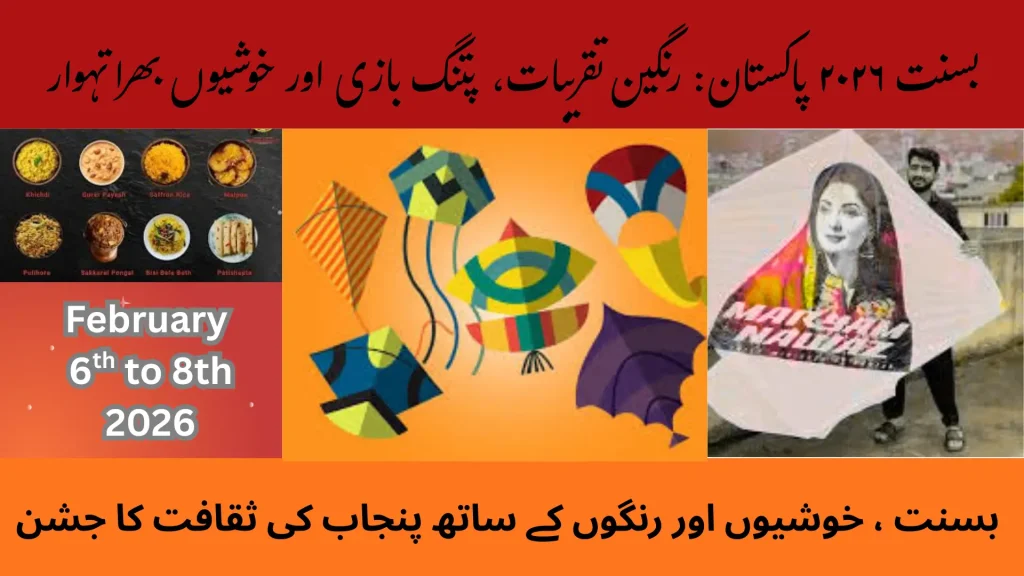
Basant 2026 in Pakistan is one of the most colorful and joyful festivals, especially celebrated in Lahore and the Punjab region. This spring festival also known as Jash e Bharan,brings people together with kites, music, food, and vibrant yellow decorations. Just like the BenazirIncomeSupportProgram uplifts communities, Basant uplifts spirits and strengthens cultural bonds across Punjab.
The festival is famous for rooftop gatherings, kite flying competitions, and community celebrations. In this article, we will cover everything about Basant 2026, including its date, history, celebrations, Muhurat, posters, wishes, and whether it is a public holiday.
Basant, also called Basant Panchami, is a spring festival with deep roots in Punjabi culture. The word “Basant” literally means spring. Traditionally, it was linked to Hindu customs and the goddess Saraswati, symbolizing knowledge, learning, and wisdom. Over time, Basant became a cultural festival celebrated by people of all communities in Punjab.
The Historical Significance of Basant
The festival gained popularity during Maharaja Ranjit Singh’s reign in the 19th century. Kite flying became a central part of the celebrations, with rooftops filled with people competing in kite battles. Traditional music, dance, and Punjabi foods added to the joy, creating a vibrant sense of community.
Despite its popularity, Basant faced challenges due to safety concerns. Kite flying often caused accidents, electrocutions, and injuries. This led to a ban on Basant celebrations for over eighteen years. However, the spirit of the festival remained alive, and people continued celebrating it informally.
In 2025, the Punjab government announced the return of Basant in a regulated form for 2026. The revival ensures safety with designated kite flying areas, strict rules, and government monitoring, while preserving Punjab’s rich cultural heritage.
Basant 2026 has two key dates: the traditional date and the official government-regulated festival dates.
Traditional Basant Panchami Date
Traditionally, Basant Panchami falls on 23 January 2026. On this day, people wear yellow clothes, offer prayers, and celebrate the arrival of spring. It is a time to honor learning, creativity, and cultural heritage.
Official Basant 2026 Festival Dates
The Punjab government has scheduled the official festival from 6th to 8th February 2026, with the launch night on 6th February in Lahore. These dates allow for safe, regulated celebrations under government supervision. Rooftop gatherings, kite flying, and cultural events will follow strict safety protocols.
How Basant is Celebrated
Basant is all about community, joy, and color.
Kite Flying
The highlight of Basant is kite flying. People gather on rooftops and open spaces to fly vibrant kites and compete in friendly battles. The competitions test skill, creativity, and agility, making kite flying both a sport and a cultural tradition.
Decorations and Yellow Theme
Yellow is the festival’s signature color, representing mustard fields, spring, and energy. People decorate homes, streets, and rooftops with yellow banners, flags, and posters. Schools and community centers organize programs to educate children about the festival while ensuring safe participation.
Food and Music
Traditional Punjabi foods like samosas, pakoras, halwa puri, and lassi are served at gatherings. Folk music, dhol beats, and dance performances create a lively, festive atmosphere. Families often host rooftop meals while watching the kites soar across the sky.
Kite Bazaars and Markets
Kite bazaars open during Basant, selling handmade kites, reels, strings, and vibrant posters. These markets build excitement and help people prepare for competitions, enhancing the festival experience.
Posters are a crucial part of Basant. They display colorful kites, sunny skies, and happy people celebrating the festival. Posters are placed in homes, schools, offices, and markets.
Beyond posters, streets and public places are decorated with yellow and multicolored banners. Rooftops are cleaned and prepared for safe kite flying. Communities often organize friendly contests, enhancing engagement and cultural participation.
Basant 2026 Muhurat
Muhurat refers to the auspicious time for kite flying. Usually in the evening, it ensures ideal wind conditions and a safe, enjoyable experience. Authorities in Lahore will announce the exact Muhurat for Basant 2026, maintaining a balance between tradition and safety.
Basant Wishes and Greetings
People send Basant wishes to friends, family, and colleagues, using phrases like “Happy Basant 2026” or “Basant Panchami Mubarak.” Social media is filled with vibrant images and messages celebrating the festival. Schools and organizations also share greetings to educate children about cultural traditions.
Is Basant a Public Holiday in Punjab?
Basant is considered an optional holiday in Punjab. Government offices usually remain open, while schools and private institutions may adjust schedules. The optional nature allows families to celebrate without disrupting work or daily life.
Cultural and Economic Impact of Basant
Basant is more than a festival; it reflects Punjab’s cultural heritage.
Community Bonding: Rooftop gatherings, kite competitions, and food events strengthen social ties.
Economic Activity: Kite markets, poster vendors, and food stalls benefit from the festival. Craftsmen showcase traditional work.
Safety & Organization: Local authorities plan traffic, rescue, and safety operations, ensuring smooth festivities.
H2: The Revival of Basant in 2026
After nearly two decades, Basant is back under government supervision. The 2026 festival features:
Safety protocols and designated kite flying areas.
Strict rules monitored by authorities.
Cultural preservation while ensuring public safety.
Chief Minister Punjab, Maryam Nawaz Sharif, approved the revival to celebrate Punjab’s heritage responsibly. The festival restores the joy, energy, and community spirit associated with Basant.
Q: What is Basant? A: Basant is a spring festival in Punjab, famous for kite flying, yellow attire, and community gatherings.
Q: When is Basant Panchami 2026 in Pakistan? A: Traditional date: 23 January 2026. Official government-regulated festival: 6–8 February 2026.
Q: Why was Basant banned in Pakistan?
A: Safety concerns from kite flying accidents, injuries, and electrocutions.
Q: Where will Basant 2026 be celebrated?
A: Mainly in Lahore; other cities will not host large kite events.
Q: What colors are associated with Basant?
A: Yellow, representing mustard fields, spring, and vibrancy.
Q: Is Basant a public holiday?
A: It is optional; offices remain open, but families can celebrate.
Conclusion
Basant 2026 in Pakistan is a festival of color, joy, and cultural heritage. Its return under government supervision ensures safety while celebrating Punjab’s traditions. Kite flying, yellow attire, posters, and rooftop gatherings make the festival visually stunning and socially engaging.
Just as initiatives like the BenazirIncomeSupportProgram uplift communities across Pakistan, Basant uplifts spirits, brings people together, and strengthens cultural bonds. Whether attending in Lahore, sending Basant wishes online, or simply enjoying the vibrant atmosphere, Basant 2026 celebrates spring, community, and cultural identity.
The festival reminds us of the importance of preserving traditions while enjoying life’s simple joys. Basant is not just a festival of kites—it is a celebration of life, community, and Punjab’s rich culture.