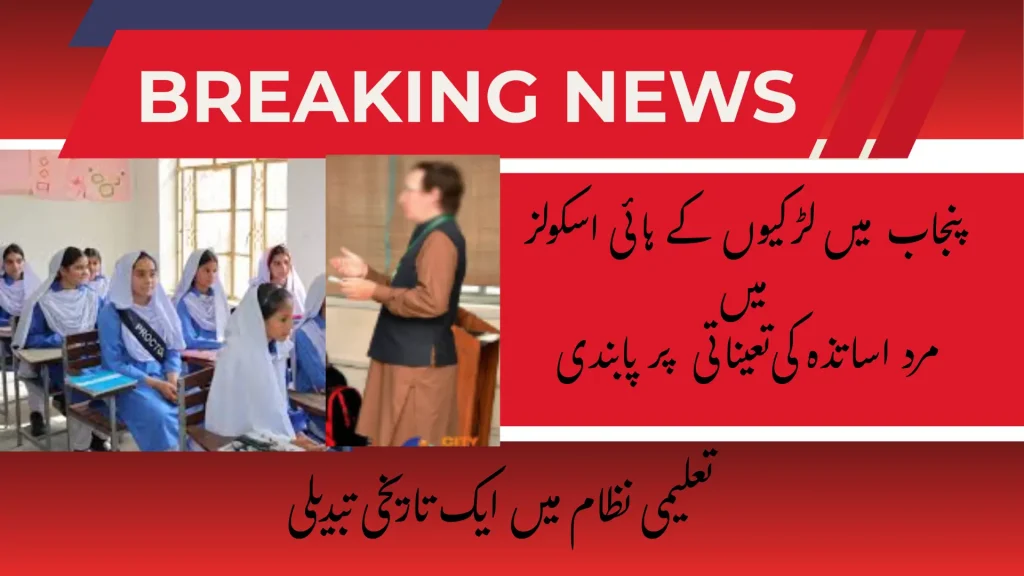
Punjab Bans Male Teachers in Girls’ High Schools is now officially enforced under a directive by the Punjab Education Foundation (PEF). The 2025 decision has reshaped how girls’ education is managed in the province.
According to the new policy, male teachers are no longer allowed to teach girls in high or higher secondary classes at any PEF partner school. The change aims to provide a more secure, comfortable, and culturally respectful environment for female students across Punjab.
The new rule is part of Punjab’s ongoing Smart Governance 2025 plan, which emphasizes modernized systems, cultural sensitivity, and gender-focused reforms. Just like the Benazir Income Support Program, which supports women at the household level, this education reform focuses on empowering girls in schools through better safety and inclusivity.
The order was officially issued in early 2025 and sent to all PEF-affiliated schools. Institutions were told to immediately remove male teachers from girls’ high and higher secondary sections and assign only female instructors. Officials described this step as necessary for improving students’ confidence, academic performance, and sense of security.
Why Punjab Introduced the Ban
Officials from the Punjab Education Foundation explained several reasons behind this shift. Reports had shown that in some schools, girls felt hesitant to participate or speak up when male teachers were present. Some parents also expressed cultural and personal concerns about mixed teaching in higher grades.
The PEF listed four main motivations behind the move: ensuring emotional comfort for students, improving classroom participation, aligning with cultural expectations, and standardizing policies already adopted in other provinces.
This new structure, they said, will create learning environments where girls feel understood, supported, and motivated to continue their education beyond matric.
Instructions Issued to All Schools
The PEF directive outlined a detailed action plan for all partner institutions to follow without delay. Schools were instructed to remove male teachers from girls’ classes, hire qualified female teachers for all senior grades, submit compliance reports to regional PEF offices, and maintain updated staff lists for monitoring.
The policy also prohibits mixed-gender teaching within girls-only campuses. Administrators were told that strict action would be taken against schools ignoring or delaying the order.
Penalties for Non-Compliance
PEF made it clear that this policy is not optional. Schools that fail to implement the order may face serious consequences. These include funding suspensions, removal from the PEF partnership program, and administrative disciplinary action.
This zero-tolerance stance shows that the government intends to enforce the reform fully, not just announce it.
How the Policy Affects Students, Teachers, and Schools
For students, the change means more comfort and confidence in classrooms. Girls are expected to participate more freely in discussions and ask sensitive or personal questions without hesitation. Early feedback from some districts already suggests better communication between students and teachers in all-girls environments.
For female teachers, this decision opens new employment opportunities, especially in science, mathematics, and humanities. Many schools are now actively recruiting women educators, creating long-term benefits for female professionals in education.
For school administrators, the transition requires restructuring. Timetables must be redesigned, recruitment drives must be accelerated, and regular compliance reports must be sent to PEF offices to show progress.
Comparing the Old System to the New Policy
Criteria
Previous Practice
New 2025 PEF Policy
Teacher Gender
Male and female both allowed
Only female teachers permitted
Student Comfort
Mixed feedback
Expected higher comfort and participation
Policy Enforcement
Flexible
Strict, monitored, and mandatory
Parent Satisfaction
Divided opinions
Generally higher approval
Compliance
Optional
Fully mandatory for all partner schools
Benefits and Challenges
The new system brings several clear benefits. Girls feel more confident and focused, and parents who were previously reluctant to send their daughters to school are now more willing to do so. It also strengthens trust between families and educational institutions, making education more culturally compatible across Punjab.
However, there are challenges too. Some rural schools may struggle to find enough qualified female teachers, especially in technical subjects. Low-budget institutions could face pressure in recruitment and training. These short-term issues, experts say, must be addressed through better planning and support.
Expert Opinions
Education experts believe that gender-sensitive environments have a direct link with academic performance, particularly in socially conservative regions. They note that students who feel emotionally secure tend to perform better and continue their studies longer.
However, researchers also warn that the government must ensure the availability of trained female teachers before expanding such policies further. If not managed properly, the reform could create temporary teacher shortages in key subjects.
Connection with Wider Social Goals
This decision reflects Punjab’s vision for inclusive education and women’s empowerment. It connects directly with welfare initiatives like the Benazir Income Support Program, which provides financial security to women. While BISP supports families economically, the PEF policy strengthens their daughters’ chances to study in a safe and positive environment. Together, they contribute to social balance, stability, and empowerment across the province.
Future Implications
The success of this reform depends on how effectively schools comply and how quickly new teachers are trained. PEF teams are expected to inspect schools regularly throughout 2025 to ensure all instructions are being followed.
If implemented successfully, this model could expand to more educational networks and set a new example for other provinces. It could lead to stronger female representation in teaching and higher education, echoing Punjab’s long-term goal of equal opportunity for all genders.
Why did Punjab ban male teachers in girls’ schools?
The decision was made to ensure comfort, safety, and cultural suitability for girls in higher grades and to encourage parents to keep their daughters in school.
Does the policy apply to all schools?
At present, it applies only to PEF-affiliated partner schools, though other systems may adopt similar guidelines in the future.
Are male teachers being completely removed?
No, the ban only applies to girls’ high and higher secondary sections. Male teachers may continue teaching in boys’ sections or other departments.
How soon must schools comply?
PEF directed schools to implement the policy immediately and submit their compliance reports without delay.
Will this affect education quality?
The outcome depends on how quickly female teachers are hired and trained. With proper planning, quality is expected to improve.
Conclusion
Punjab’s move to ban male teachers in girls’ high and higher secondary schools is a bold but carefully planned reform. It focuses on creating a respectful and safe environment that encourages girls to stay in school and perform better academically.
Just as the Benazir Income Support Program protects women financially, this education policy protects them emotionally and socially. Together, they represent Punjab’s growing effort to build a fair and inclusive society where women and girls can thrive without barriers.