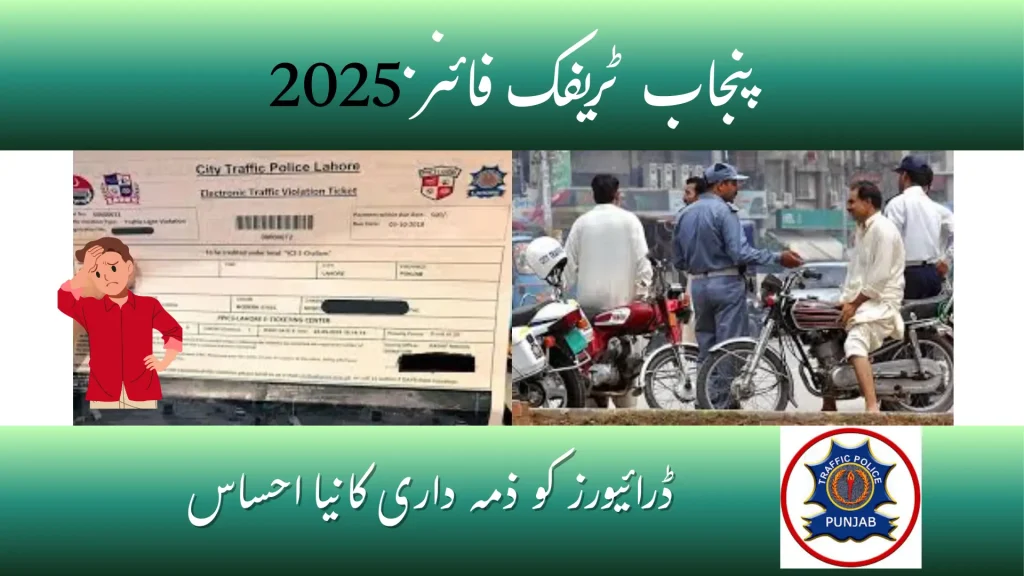
The Punjab Traffic Fines 2025 officially came into effect on 1 December 2025, completely reshaping how traffic laws work across the province. Just like the Benazir Income Support Program brought transparency to welfare payments, this reform brings digital accountability to every driver on the road.
Under Chief Minister Maryam Nawaz’s leadership, the Punjab Government has linked every traffic violation to your CNIC through DLIMS (Driving License Information Management System). From now on, every mistake behind the wheel becomes part of your permanent driving record, no excuses, no missing challans, and no paperwork loopholes.
For years, small fines and loose enforcement encouraged reckless driving. Many drivers ignored the law because a Rs 200 challan was easy to forget. That era is over.
Now, every penalty is logged instantly inside DLIMS. When a driver runs a red light or drives without a valid licence, it’s recorded in real time and linked to their CNIC. These entries appear during licence renewal or vehicle registration checks.
This isn’t just about punishment, it’s about awareness. When people realize every violation follows them digitally, safer habits naturally develop.
Maryam Nawaz’s Vision for Safer Roads
As Punjab’s first female Chief Minister, Maryam Nawaz has made road safety a symbol of modern governance. Her administration introduced AI-powered cameras, automated e-challans, and a unified database shared by PSCA, DLIMS, and the Traffic Police.
This digital ecosystem replaces manual challans with verified, corruption-free records. Whether you’re in Lahore, Faisalabad, or Rawalpindi, every driver is treated equally under the same transparent system.
Each offence automatically creates a digital entry in DLIMS. It’s a clean, traceable system that rewards responsible drivers and flags repeat offenders quickly.
Why These Changes Matter for Every Driver
This reform isn’t just about increasing fines, it’s about creating a culture of accountability. Every violation is tied to your CNIC and stored permanently in DLIMS.
Breaking rules repeatedly now leads to heavier consequences. Licence renewals may be delayed, insurance verification can become difficult, and traffic enforcement will watch frequent offenders more closely.
But if you keep your record clean, you’ll enjoy smooth renewals and peace of mind. Responsible drivers earn the same kind of credibility as taxpayers with strong credit histories.
What Makes the 2025 Reform Different
Digital Record-Keeping: Each violation is logged in DLIMS, forming a permanent, tamper-proof record just like international penalty-point systems.
Stronger Penalties for Repeat Offenders: Habitual violators face tougher licence renewals, compulsory safety-training classes, and close monitoring by authorities.
Uniform Fine Structure: Old fines of Rs 200–500 are gone. The new minimum is Rs 2,000 or more, reflecting Punjab’s commitment to serious road discipline.
This unified system ensures fairness and consistency across all districts.
How Digital Monitoring Builds Accountability
Thanks to AI cameras and e-challans, offences like speeding or wrong-lane driving are detected automatically. Once recorded, they appear in DLIMS instantly.
This approach eliminates human bias and minimizes corruption. Everyone is judged by the same digital standard. If you obey the rules, your record stays spotless; if not, DLIMS remembers.
How to Stay Safe and Fine-Free
Driving safely in Punjab is now easier and far more important. Always keep your CNIC, driving licence, registration, and tax token with you. Follow lane markings, wear seatbelts, avoid phone use while driving, and ensure your car has no tinted glass or unauthorized modifications.
Even if no officer stops you, the system may already have detected your mistake. Checking your DLIMS record regularly is now part of responsible driving.
The Cost of Ignoring Repeated Offences
Repeat violations lead to more than high fines. Your licence renewal might be delayed or suspended, and commercial drivers could lose route permits or face registration issues.
Think of DLIMS as your driving credit score: the cleaner your record, the easier your driving life becomes.
The Bigger Picture – A Safer Punjab for Everyone
This reform goes beyond enforcement; it’s about saving lives. Roads under digital surveillance already show fewer accidents and smoother traffic flow. The system rewards disciplined drivers and holds careless ones accountable. Everyone benefits drivers, pedestrians, and families.
Drivers across Punjab can feel the difference. Cameras watch quietly, making everyone more aware of speed limits, signals, and safety. Dashboard cameras are becoming common too, helping drivers protect themselves and encouraging honesty on the road.
For the first time, discipline isn’t driven by fear, it’s built on mutual respect and responsibility.
Conclusion – Driving Toward a Responsible Future
The Punjab Traffic Fines 2025 reform is more than a government order — it’s a digital awakening. By linking every CNIC to DLIMS, Punjab has introduced accountability at the steering wheel. Just as the Benazir Income Support Program revolutionized welfare transparency, this reform ensures fairness and traceability in traffic enforcement.
Obeying traffic laws now means smoother renewals and safer journeys. Ignoring them means permanent records and stricter penalties. The message is simple: in Punjab 2025, safety and accountability travel together.
Frequently Asked Questions (FAQ)
1. What is DLIMS in Punjab Traffic Fines 2025?
DLIMS (Driving License Information Management System) is a digital platform that records every traffic violation under your CNIC, replacing manual challans with real-time data tracking.
2. When did the new Punjab Traffic Fines take effect?
The new fines and rules officially began on 1 December 2025, under CM Maryam Nawaz’s reforms.
3. What is the minimum fine under Punjab Traffic Fines 2025?
Most common offences now start at Rs 2,000, compared to earlier fines of Rs 200–500.
4. Can repeat offenders lose their driving licence?
Yes. Repeated violations may result in licence suspension, mandatory training, or delays in renewal approval.
5. How can drivers check their e-challans or traffic records?
Drivers can visit the official DLIMS portal or Punjab Safe City Authority website to check e-challans using their CNIC or vehicle registration number.
6. Are these fines the same for all cities in Punjab?
Yes. The new system applies uniformly across Punjab from Lahore and Multan to Bahawalpur and Rawalpindi.