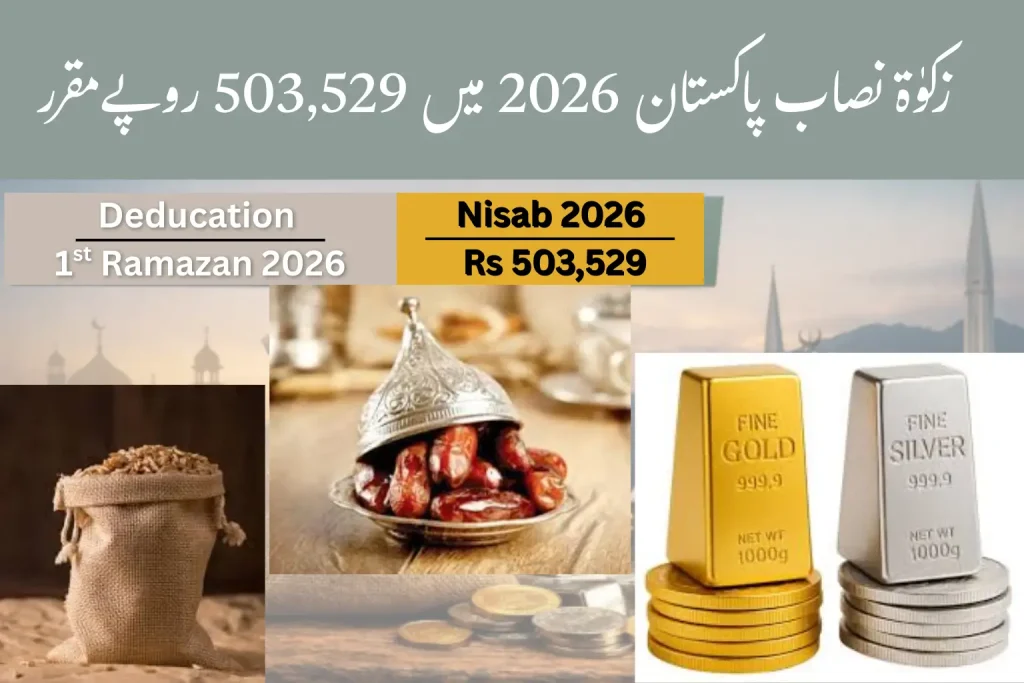
Zakat Nisab in Pakistan 2026 is Rs 503,529. This means Zakat will be deducted only if an eligible bank account has this amount or more at dawn on the first day of Ramadan 2026. Because the amount increased a lot this year, many people are now worried about their savings.
Zakat is one of the five pillars of Islam and applies only to extra wealth, not daily income. The money collected through this system helps poor families and supports welfare efforts in Pakistan, including programs linked with the Benazir Income Support Program.
Nisab shows the point where savings become surplus wealth. Islam does not apply Zakat to money needed for food, rent, bills, education, or medical needs. This rule protects people who earn income but do not have real savings.
Zakat becomes compulsory only when savings reach a fixed amount and remain there for one full Islamic lunar year. In Pakistan, the announced Nisab is mainly used for automatic bank deduction and legal compliance.
How the 2026 Amount Was Reached
Islam defines Nisab using fixed amounts of gold and silver. For bank deduction, Pakistan follows the silver-based method because it creates one standard amount for everyone. Silver usually sets a lower limit than gold.
For 2026, this calculation resulted in Rs 503,529. All banks must apply this same amount, and there is no difference by city, bank branch, or income level.
Zakat deduction happens only once a year and the timing is strict. Banks check account balances at dawn on the first day of Ramadan 2026. Only the balance at that exact moment is counted.
If money is added later that day, it does not matter for this year. If money is withdrawn before dawn, Zakat will not be deducted. This rule applies to all banks, microfinance institutions, and fintech platforms.
Which Deposits Fall Under Zakat Deduction
The Zakat Nisab 2026 in Pakistan applies only to specific types of deposits. Banks calculate balances on the first day of Ramadan and follow the announced rules strictly.
Savings bank accounts are included
Profit and loss sharing accounts are included
Similar savings-linked deposit accounts are included
Balances below Rs 503,529 remain exempt
Current accounts used only for transactions are not part of this system.
Table to Understand the Change and Account Impact
Category
Condition
Zakat Status
Savings Account
Balance ≥ Rs 503,529
Zakat deducted
Profit & Loss Sharing Account
Balance ≥ Rs 503,529
Zakat deducted
Any Account
Balance below Rs 503,529
No deduction
Nisab 2025
Rs 179,689
Lower amount
Nisab 2026
Rs 503,529
Around 180% higher
This table shows which accounts are affected and how sharply the Nisab increased compared to last year.
Why the Nisab Increased So Sharply in 2026
The Zakat Nisab 2026 in Pakistan is around 180 percent higher than last year. In 2025, the Nisab was Rs 179,689, which meant many more accounts crossed the limit.
This increase did not happen by choice. Nisab is linked to gold and silver prices, and when metal prices rise, the Nisab amount rises automatically.
What This Change Means for the Banking Sector
Pakistan has more than 177 million bank accounts across commercial banks, microfinance banks, and fintech platforms. With the higher Nisab, fewer accounts are expected to qualify for automatic Zakat deduction.
Many small and medium-balance accounts will remain below the limit. This reduces pressure on people who use bank accounts mainly for salaries, household expenses, or short-term savings.
Compliance and Central Zakat Account Process
Banks and financial institutions must strictly follow the Zakat Nisab 2026 rules. After deducting Zakat, they must immediately deposit the amount into the Central Zakat Account within the national banking system.
Banks must also submit official returns after depositing the funds. This process ensures transparency, proper records, and accountability in Zakat collection.
Zakat Exemption Affidavit Explained Simply
Some people prefer to pay Zakat themselves or follow a different religious opinion. For this reason, banks allow submission of a Zakat exemption affidavit.
This affidavit must be submitted before Ramadan begins. Once Ramadan starts, banks cannot stop the deduction for that year, even if the person qualifies for exemption.
FAQs:
Does Zakat apply to every bank account? No. Zakat applies only to savings-type and profit-based accounts.
Is Zakat deducted every month? No. Zakat is deducted once a year at the start of Ramadan.
Do fintech and microfinance accounts follow the same rule? Yes. The same Nisab rules apply to all banking platforms.
What if my balance is exactly Rs 503,529? If the balance meets or exceeds the Nisab at the required time, Zakat is deducted.
Is money kept for bills included? No. Zakat applies to savings, not money needed for immediate expenses.
Conclusion
Zakat Nisab in Pakistan 2026 is Rs 503,529, which is one of the biggest increases in recent years. Because of this higher threshold, fewer bank accounts will face automatic Zakat deduction, giving relief to many households.
By understanding the Nisab amount, deduction timing, and bank rules, you can approach Ramadan with clarity and confidence instead of confusion.