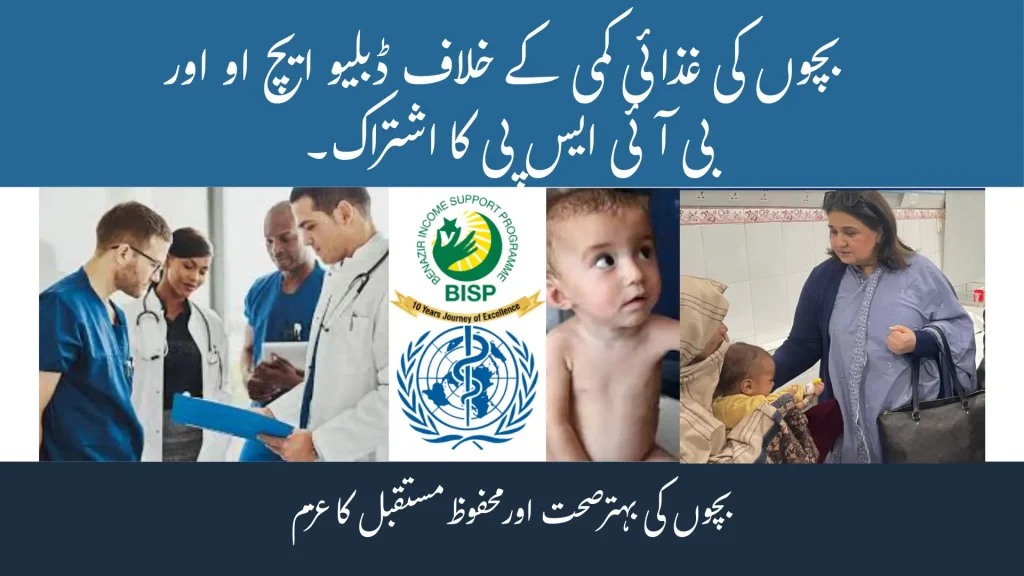
The WHO & BISP partnership to fight child malnutrition in Pakistan is a national health effort. It treats children with severe malnutrition. It also helps families prevent the problem from returning. The program works through public hospitals and the Benazir Income Support Program. Its main aim is to protect children’s lives and support healthy growth.
Child malnutrition is still a serious issue in Pakistan. This partnership addresses it at both medical and family levels.
WHO & BISP Partnership to Fight Child Malnutrition in Pakistan
This partnership brings together the World Health Organization and the Benazir Income Support Program. Both organizations work together. They treat malnutrition as a health issue. They also treat it as a poverty issue.
WHO provides medical standards and training. BISP connects poor families to health services. This combined approach improves results.
Why child malnutrition still threatens Pakistan’s children
Malnutrition weakens children. It slows physical growth. It affects brain development. It lowers immunity. Children fall sick more often.
WHO reports high levels of wasting and stunting in Pakistan. Poverty is a major cause. Rising food prices add pressure. Lack of nutrition awareness also plays a role. WHO estimates that malnutrition costs Pakistan billions each year through health care costs and lost productivity.
What actually happens when a child enters this program
Children with severe malnutrition are referred to Nutrition Stabilization Centres. These centres are based in government hospitals. Trained doctors and nurses work there.
Recently, 40 new centres were added. These centres serve high-risk districts. Families now travel less for treatment. Children stay until doctors confirm recovery and stability.
Support for mothers is built into the system
Mothers are a key part of recovery. The program supports them directly.
During treatment, mothers receive counseling. They learn proper feeding methods. They learn hygiene practices. They learn how to spot early danger signs. WHO reports that more than 100,000 caregivers receive counselling every year.
This support helps children stay healthy after discharge.
Measured outcomes show consistent results
WHO data shows strong performance. More than 43,000 children receive treatment every year. Recovery rates stay between 95% and 98%. These results are higher than global minimum standards.
Performance area
Reported outcome
Children treated yearly
43,000+
Recovery success rate
95–98%
New centres added
40
Caregivers counselled
100,000+ annually
Coverage
Priority districts nationwide
These numbers show the program delivers consistent results year after year.
What makes this approach stronger than past nutrition efforts
Earlier programs focused mostly on food aid. Many lacked medical treatment and follow-up.
This partnership is stronger because it connects health care and family support:
Treatment follows WHO medical standards
Mothers learn how to prevent relapse
Public hospitals work with BISP outreach
Impact beyond individual families
This program also strengthens Pakistan’s health system. Health workers receive training. Treatment rules remain consistent. Referral systems improve between communities and hospitals.
WHO officials state that this approach builds long-term national capacity.
Existing challenges and honest limitations
Malnutrition has not ended. Food prices are rising. Climate issues affect food supply. Population growth adds pressure. WHO confirms that current centres cannot reach all children yet.
Plans include expanding centres and training more staff. Community screening will improve. Where data is limited, WHO continues monitoring and evaluation.
Why this partnership matters for Pakistan’s future
Healthy children learn better. They grow into productive adults. Malnutrition damages health systems and the economy.
By treating children early and supporting families, this partnership reduces long-term harm. It plays a key role in Pakistan’s child health efforts for 2026 and beyond.
Frequently Asked Questions
What is the purpose of the WHO & BISP partnership?
It treats severe child malnutrition and helps prevent repeat cases.
Who can receive treatment under this program?
Children under five with severe acute malnutrition.
Is treatment free in Nutrition Stabilization Centres?
Yes. Treatment and counselling are free in public hospitals.
How successful is the program?
WHO reports recovery rates above 95%.
Does the program support families after treatment?
Yes. Mothers receive counseling to maintain child health.
Conclusion
The WHO & BISP partnership to fight child malnutrition in Pakistan combines medical care with social support. It saves lives. It strengthens families. It improves hospitals.
With continued expansion, more children can benefit in the coming years.